.png?width=1326&height=405&name=EMPALogo_final_white-01%20(1).png)

Remote energy healing sessions have become a common part of many holistic practices. Some practitioners use a hybrid model, while others work entirely at a distance. The flexibility and accessibility of virtual sessions can be appealing for both practitioners and clients.
While certain in-person hazards disappear when you are no longer sharing a physical space, other forms of risk remain — and in some cases, become easier to overlook.
So, are there risks to having a remote energy healing practice?
Yes. The risks don’t vanish. They shift.
As a professional association supporting energy healers, EMPA helps practitioners understand where virtual work introduces that risk.
By understanding where these risks tend to arise, you can make more informed decisions about how you offer remote sessions and what protections matter most.
In this article, we’ll look at some common risks practitioners face when offering remote energy healing sessions and what you can do to better protect yourself, your clients, and your work.
 Reduced Physical Contact Does Not Mean Risk-Free
Let’s open this up a bit more. It’s true, when conducting a remote healing session, a client probably won’t find themselves tripping over your rug, or slipping on ice outside your session room.
That said, remote energy healing sessions are still professional services offered in exchange for a client’s time, payment, and trust. Distance changes the setting, but it doesn’t eliminate the business dynamics involved. Clients will continue to rely on your ability to communicate, define boundaries, and set standards.
If those elements are assumed rather than clearly understood, risk can show up in different ways. Let’s talk about the most common areas where remote, distant, and virtual healers may experience that risk.
💡Not all risk looks the same. Some issues stem from client interactions, while others come from everyday business operations. Understanding how different types of liability insurance apply can help clarify where protection matters most. Read: Do Energy Healers Need Both Professional and General Liability Insurance?
.png?width=248&height=216&name=The%20Risks%20of%20Offering%20Remote%20Energy%20Healing%20Sessions%20(1).png) Client Misunderstanding and Expectation Gaps
Client Misunderstanding and Expectation Gaps
Remote sessions often rely more heavily on verbal explanation and written communication. Without clear alignment, clients may form assumptions about:
- What the session will address
- What outcomes are realistic
- How progress should be interpreted
Misunderstandings don’t always show up immediately. They can surface later as dissatisfaction, confusion, or frustration. Even when a practitioner feels the session went well, a client may feel something different if expectations were never clearly aligned.

.png?width=169&height=237&name=The%20Risks%20of%20Offering%20Remote%20Energy%20Healing%20Sessions%20(2).png) Consent and Permission in Remote Energy Healing
Consent and Permission in Remote Energy Healing
Because sessions are hands-off and take place at a distance, some practitioners may skip sharing a consent form with their clients to sign.
Remote clients still need a clear understanding of what they are agreeing to and what policies are in place. Without this, uncertainty with boundaries and permissions are more likely to occur.
Remote sessions often introduce factors that benefit from explicit permission, such as:
- How communication takes place before, during, or after a session
- What a session involves when practitioner and client are not in the same space
- How technology is used to deliver the service
- What the client is responsible for in their own environment
When permission is implied rather than established, questions can arise later about what the client agreed to.
💡 Knowing what paperwork is typically used with new clients can help reduce misunderstandings before they start. Read: What Paperwork Do You Need for a New Energy Healing Client?
.png?width=190&height=206&name=The%20Risks%20of%20Offering%20Remote%20Energy%20Healing%20Sessions%20(3).png) Privacy and Confidentiality Concerns
Privacy and Confidentiality Concerns
Remote sessions depend on technology and environments that practitioners do not fully control. Privacy risks can arise when:
- A client is not in a private location
- Others are within hearing range
- Digital platforms are not suited for sensitive conversations
These risks include confidential conversations being overheard unintentionally, or session details being exposed when non-secure or platforms are used. Even when these situations are accidental, they can still be experienced by a client as a breach of confidentiality.
Even when privacy concerns are unintentional, they can affect client trust and raise questions about professional standards. Practitioners are still responsible for taking reasonable steps to protect confidentiality, even when sessions happen at a distance.
💡Do energy healers need to be HIPAA compliant? Read: Safe Practice: Embrace HIPAA Compliance
.png?width=219&height=215&name=The%20Risks%20of%20Offering%20Remote%20Energy%20Healing%20Sessions%20(4).png) Documentation and Recordkeeping for Virtual Healers
Documentation and Recordkeeping for Virtual Healers
Virtual work sometimes feels less formal than in-person sessions. This can lead to inconsistent documentation, missing notes, or incomplete records.
If a concern is raised later, unclear or missing records can make it difficult to explain what took place or demonstrate that professional standards were followed. Documentation might be overlooked in remote settings, yet it plays a key role in protecting both the practitioner and the client.

.png?width=280&height=331&name=The%20Risks%20of%20Offering%20Remote%20Energy%20Healing%20Sessions%20(5).png) Scope of Practice Boundaries in Remote Energy Healing
Scope of Practice Boundaries in Remote Energy Healing
Offering sessions remotely does not change the scope of the work you are qualified to provide. However, distance-based sessions can make it easier for boundaries to blur — especially when communication happens primarily through conversation, messaging, or written summaries.
To avoid confusion, it’s important that both the nature of your services and the limits of your role are clearly understood. This includes being mindful of words or actions that could be interpreted as medical in nature. Even unintentional references to diagnosing, treating, preventing illness, or replacing licensed care can raise red flags and often create problems that go beyond a misunderstanding into legality risk.
Clear scope boundaries help protect both the practitioner and the client by setting accurate expectations from the start.
💡 As a practical reference point, most practitioners outline their scope of practice within a signed informed consent document. This is where clients can clearly see what services are offered, what they are not, and how the work is intended to be used.
.png?width=152&height=231&name=The%20Risks%20of%20Offering%20Remote%20Energy%20Healing%20Sessions%20(6).png) Emotional Distress and Perceived Harm
Emotional Distress and Perceived Harm
Physical injury is not the only basis for client concerns. Clients may report emotional distress, feeling harmed, or even disappointment caused by an experience they perceived to create a negative mental or emotional response.
Remote delivery does not prevent a client from filing a complaint or raising concerns. Distance does not eliminate emotional impact, and dissatisfaction does not require physical contact to exist.
 What’s Next: Understanding the Risks of Remote Energy Healing Sessions
Remote energy healing sessions may reduce certain physical hazards, but they still carry risks that are easier to miss when work happens at a distance. Misunderstandings, unclear boundaries, consent gaps, and scope issues are often not the result of poor practice — they stem from assumptions about how remote work differs from in-person care.
If you’re offering virtual sessions, or considering adding them, recognizing where these risks show up is an important first step. Awareness allows you to make thoughtful decisions about how your sessions are structured and how expectations are set with clients.
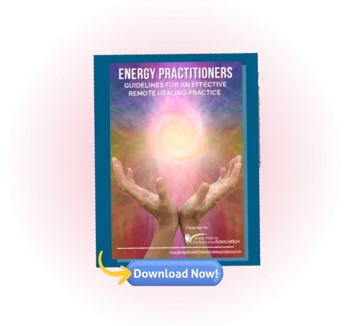
For practitioners who want clearer guidance around consent, scope of practice, documentation, privacy considerations, and other standards specific to remote work, the Remote Practice Guide offers a more detailed framework.
Download the Remote Practice Guide to better understand how experienced practitioners approach remote sessions and what considerations matter most when offering services at a distance.
Awareness is what allows remote energy healing to remain both professional and sustainable over time.
Disclaimer: This article is for educational purposes only and does not provide legal, financial, or medical advice. The examples are general, and coverage may vary by policy. Always refer to your insurance provider or policy language for specific details, as the policy terms take precedence. For legal concerns related to your practice, consult an attorney.
Topics: