.png?width=1326&height=405&name=EMPALogo_final_white-01%20(1).png)

.png?width=221&height=222&name=Supporting%20the%20Whole%20Person%20in%20Energy%20Healing%20Safety%2c%20Ethics%2c%20and%20Professional%20Boundaries%20Explained%20(1).png) There’s a tension many energy healers carry. You want to be fully present with clients—open, intuitive, compassionate—while also feeling confident that you’re not overstepping, overwhelming someone, or carrying responsibility that isn’t yours to hold.
There’s a tension many energy healers carry. You want to be fully present with clients—open, intuitive, compassionate—while also feeling confident that you’re not overstepping, overwhelming someone, or carrying responsibility that isn’t yours to hold.
Emotional releases happen. Clients share vulnerable stories. Sometimes they leave a session changed in ways you didn’t expect. When that happens, it’s natural to wonder: Am I supporting them well? Am I doing this safely? Where are the lines supposed to be? These questions don’t come from doubt or insecurity —they come from caring deeply about the people you serve and the integrity of your work.
What to know:
Supporting the whole person in energy healing means working with energetic experiences while maintaining clear ethical boundaries, informed consent, and professional scope. Safe practice does not limit healing; it creates the conditions that allow healing to unfold with reduced risk for confusion.
In this article, you’ll learn what “supporting the whole person” means in the context of energy healing, why safety and ethics are a priority for healers, and how professional boundaries protect both your clients and your practice.
Key takeaways preview:
- What whole-person support includes—and what it does not
- Why emotional safety matters
- How ethics and boundaries strengthen trust and credibility
- Practical ways practitioners protect themselves and their clients
.png?width=137&height=296&name=Supporting%20the%20Whole%20Person%20in%20Energy%20Healing%20Safety%2c%20Ethics%2c%20and%20Professional%20Boundaries%20Explained%20(2).png) What “Supporting the Whole Person” Means in Energy Healing
What “Supporting the Whole Person” Means in Energy Healing
In energy healing, supporting the whole person means recognizing that clients are not just physical bodies or made up of a single system; they are energetic; they are emotional, relational, and meaning-making human beings. Sessions may surface feelings, memories, or insights alongside energetic shifts.
Whole-person support is not about analyzing emotions, interpreting trauma, or guiding a client’s psychological process. Leave this for licensed medical professionals rather than risk your business by overstepping your scope of work. Instead, we like to think of whole-person care as creating a respectful, grounded environment where clients can notice their own experiences safely and at their own pace.
At its core, this approach honors three principles:
- The client remains the authority on their own experience
- The practitioner facilitates, rather than directs, inner processes
- Healing work stays within a clearly defined, non-clinical scope
This distinction is essential for both ethical practice and long-term sustainability.
 Why Safety Matters Even When the Work Is Gentle
Many practitioners associate “risk” with physical touch. However, challenges in energy healing may also arise from emotional vulnerability and misunderstanding, not just physical harm.
Clients may:
- Experience unexpected emotional release
- Attach meanings to sensations or insights
- Expect outcomes that were never promised
- Feel unsettled if integration support is unclear
Safety matters because it helps practitioners respond to these moments calmly and appropriately—without trying to fix, explain, or take responsibility for a client’s inner process.
When safety is integrated into practice, it becomes easier to stay present without becoming over-involved, and compassionate without crossing into roles that don’t belong to you.
.png?width=235&height=227&name=Supporting%20the%20Whole%20Person%20in%20Energy%20Healing%20Safety%2c%20Ethics%2c%20and%20Professional%20Boundaries%20Explained%20(3).png) Core Ethical Principles That Guide Safe Energy Healing
Core Ethical Principles That Guide Safe Energy Healing
Clarity of role and scope
Ethical practice begins with clarity. Energy healing supports well-being; it does not diagnose, treat, prevent, cure, or replace medical or mental health care. Clear language protects both practitioners and clients from confusion.
Informed consent and expectations
Clients deserve to understand what a session involves, what it may bring up, and what it does not promise. Consent is ongoing, not a one-time formality.
Emotional awareness without interpretation
Feelings may arise- but interpreting their meaning or origin for a client crosses ethical lines. Safe practitioners allow emotions without assigning narratives.
Respect for client agency
Clients choose how to engage with their experience. Suggestions are optional, not directives.
Ongoing self-regulation and education
Ethics are not static. Practitioners who continue learning about boundaries, safety, and risk management strengthen their professionalism over time.
💡 Ready to strengthen your professional foundation? Read: Code of Ethics for Energy Healers: Best Practices for a Safer Practice.
.png?width=285&height=227&name=Supporting%20the%20Whole%20Person%20in%20Energy%20Healing%20Safety%2c%20Ethics%2c%20and%20Professional%20Boundaries%20Explained%20(4).png) Professional Boundaries That Support Healing
Professional Boundaries That Support Healing
Boundaries are often misunderstood as walls. In practice, they function more like containers—they hold the work, so it doesn’t spill into confusion, dependency, or burnout.
Healthy boundaries support:
- Clear session roles and time limits
- Appropriate communication outside sessions
- Emotional presence without emotional entanglement
- Practitioner sustainability
When boundaries are clear, clients feel safer—not less supported—because they know what to expect and what belongs to them.
.png?width=212&height=314&name=Supporting%20the%20Whole%20Person%20in%20Energy%20Healing%20Safety%2c%20Ethics%2c%20and%20Professional%20Boundaries%20Explained%20(5).png) Common Beliefs Practitioners Hold — and What’s Helpful to Know
Common Beliefs Practitioners Hold — and What’s Helpful to Know
Many practitioners wonder: If I’m intuitive and careful, I’ll naturally know what’s safe.
What’s important to know: Intuition is valuable, but it works best alongside clear ethical frameworks. Boundaries and safety practices don’t replace intuition; they protect it from blind spots.
It’s understandable to think: Talking about safety or boundaries might make sessions feel heavy.
A clearer perspective: Most clients experience clear communication as reassuring. Transparency builds trust and professionalism, not fear.
A common inner question: Do boundaries limit how deeply I can work?
A supportive reframe: Boundaries make depth sustainable. They allow healing to unfold without placing inappropriate responsibility on either party.
.png?width=187&height=217&name=Supporting%20the%20Whole%20Person%20in%20Energy%20Healing%20Safety%2c%20Ethics%2c%20and%20Professional%20Boundaries%20Explained%20(6).png) Practical Tools That Support Ethical, Safe Practice
Practical Tools That Support Ethical, Safe Practice
Safe practice is not about rigid rules, it’s about alignment.
Common tools include:
- Grounding and integration practices before and after sessions
- Clear intake conversations or agreements
- Awareness of when referral or additional support may be appropriate
- Professional education focused on ethics and risk awareness
Many practitioners also find support through professional communities such as the Energy Medicine Professional Association, which offer guidance, education, and standards tailored specifically to energy healing and holistic work.
If you want your website to reflect your professionalism, start here: Grow Your Practice with a Safe and Ethical Website.
.png?width=137&height=127&name=Supporting%20the%20Whole%20Person%20in%20Energy%20Healing%20Safety%2c%20Ethics%2c%20and%20Professional%20Boundaries%20Explained%20(7).png) Common Questions Practitioners Ask
Common Questions Practitioners Ask
Do I need boundaries if my clients feel comfortable with me?
Comfort and clarity work together. Boundaries support trust by setting clear expectations, even in warm, relational practices.
What if a client becomes very emotional during a session?
Emotional responses can happen. Safe practice involves staying present, grounded, and within scope—without interpreting or directing the experience.
Is safety mainly about protecting myself?
Safety supports both practitioner and client. It’s about mutual respect, clarity, and care.
 What This Means for Your Practice Long-Term
When safety, ethics, and boundaries are integrated into your work:
- You feel more confident holding space
- Clients feel respected and empowered
- Misunderstandings are less likely to escalate
- Your practice becomes more sustainable and credible
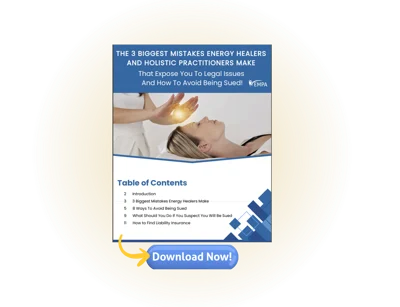
If you want to strengthen your boundaries and avoid the most common ethical missteps practitioners face, download our free guide: The 3 Biggest Mistakes Energy Healers Make — and How to Avoid Them. It’s a simple next step toward building a practice that’s grounded, clear, and sustainable.

Supporting the whole person does not require you to carry the whole person. Clear, ethical practice allows you to serve with depth and peace of mind.
Disclaimer: This article is for educational purposes only and does not constitute legal, medical, or insurance advice. Laws and coverage vary by state and policy. For legal questions, consult a qualified attorney. For insurance questions, refer to your policy language or provider.
Topics: