.png?width=1326&height=405&name=EMPALogo_final_white-01%20(1).png)
What’s the difference between in-person and remote energy healing when it comes to safety and liability?
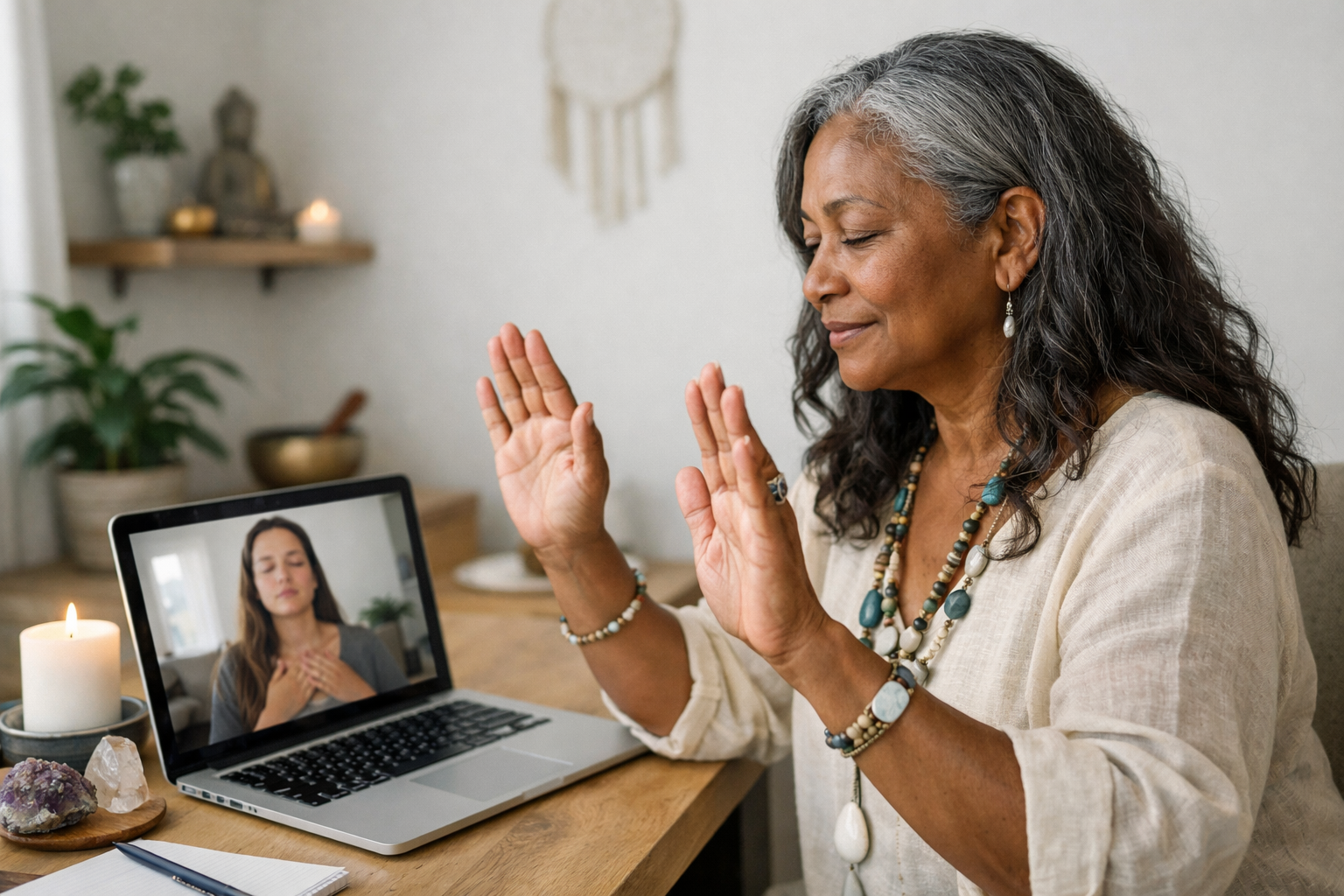
If you’re offering sessions at a distance, does that actually change your level of responsibility?
Both in-person and remote sessions involve considerations around risk, but the way those appear can differ depending on the setting. In-person sessions carry more physical and environmental risk, while remote sessions carry more communication, privacy, and expectation-based risk.
If you’re offering (or considering) remote sessions, it’s important to understand the potential difference in risks so you can prepare for them. In the sections below, we’ll break down how in-person and remote sessions compare, and what practitioners should be aware of in each setting.
💡 In this context, safety refers to protecting the client’s physical and emotional experience, while liability refers to situations where a client may raise a concern, complaint, or claim based on how a session was experienced.
 How In-Person and Remote Healing Sessions are Different
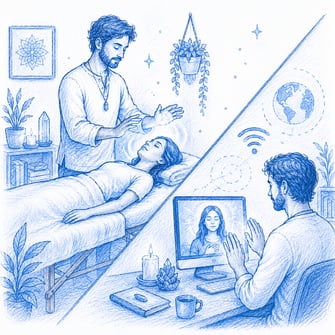
At a basic level, the difference is straightforward: one session happens in person, and the other happens at a distance (over phone, video, or within an agreed-upon time). You already know that…it’s right there in the name!
What changes between the two session formats is the way a session is actually conducted.
In an in-person setting, you’re working within a shared environment that you can fully see and manage. You can read body language more easily, adjust the physical space in real time, and respond to what’s happening as it unfolds. The structure of the session is largely supported by the environment you’ve created.
In a remote setting, that shared environment no longer exists. You’re relying more on how the session is explained, how the client prepares, and how you communicate before, during, and after the experience. Many of the cues you’d normally pick up in person are less visible, which means more of the session’s structure is created through clarity, expectation-setting, and follow-through.
These differences don’t change the purpose of the healing work, but they do change your organization, set-up, and communication. That shift in attention is what shapes your safe practices to reduce risk in each type of session.
💡 Practitioners may not realize they're at risk until they’ve already started offering sessions online. Protect yourself from the start – read The Risks of Offering Remote Energy Healing Sessions to learn more.
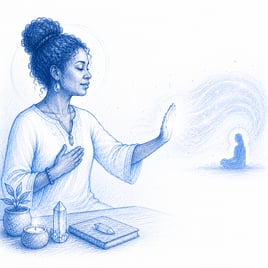 Safety and Risk Considerations: In-Person vs. Remote Sessions
When comparing in-person and remote energy healing sessions, it’s helpful to look at where different considerations tend to show up more prominently.
Both formats involve professionalism, preparation, and clear communication—but the areas of focus can shift depending on the setting.
Here’s a simple way to visualize how these considerations compare:
| Consideration | Potential Risk & Consequence | In-Person Sessions | Remote Sessions |
| Physical Environment | Client trips entering your space → injury claim | High | Minimal |
| Technology Reliability | Call drops mid-session → disrupted experience or complaint | Minimal | High |
| Client Privacy | Conversation overheard → breach of confidentiality concern | Moderate | High |
| Communication Clarity | Client misunderstands session → unmet expectations or dispute | High | High |
| Documentation & Consent | No signed consent → unclear agreement if issue arises | High | High |
| Use of Tools or Materials | Reaction to oils/tools → client reports harm | High | Minimal |
| Client Preparation | Client joins distracted → ineffective session or dissatisfaction | Moderate | Moderate |
This comparison highlights how each format has its own set of considerations and approach. Understanding where these responsibilities present themselves can help healers and practitioners approach different session layouts with greater awareness and intention.
💡 It’s easy to assume remote sessions come with fewer risks, but that’s not always the case. Do I Need Liability Insurance If I Only Offer Remote Energy Healing? breaks down what to consider so you can make more informed decisions about your practice.
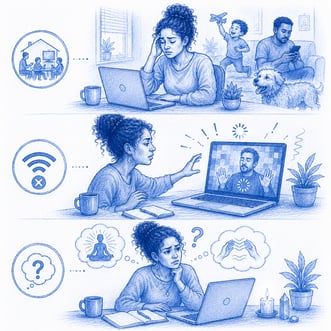 How Remote Healers May Overlook Risk in Sessions
One of the biggest differences between in-person and remote sessions isn’t just how they’re delivered; it’s what could be missed.
In an in-person session, most practitioners are naturally aware of their surroundings. You’re thinking about your space, how a client moves through it, and what they interact with during the session. These considerations are visible and easier to manage because they’re right in front of you.
Remote sessions are different in a more subtle way. Because you’re not physically sharing the same space, it’s easier to assume certain things are “handled”—when in reality, they’ve just shifted out of view.
For example:
- A client joins from a distracted or shared environment
→ …making it harder for them to relax or engage in the session - Technology interruptions disrupt the flow
→ ..leading to a fragmented or less effective experience - The client doesn’t fully understand what to expect
→ …which can result in confusion, unmet expectations, or dissatisfaction
These are areas where assumptions can replace preparation if they’re not addressed. With remote work, more of that responsibility shifts into:
- How the session is explained
→ You might try to clearly outline what the session will look like, including timing, format, and how you’ll connect. - How the client prepares
→ Consider providing simple guidance so the client can create a quiet, comfortable, and distraction-free space ahead of time. - How expectations are communicated in advance
→ It can help to set clear expectations about communication, boundaries, and what the client can anticipate before, during, and after the session.
💡 In remote sessions, communication becomes the primary way you create structure, and boundaries define what you are responsible for — and what remains with the client.
 What’s Next: Bringing Confidence to Your Remote and In-Person Practice
Whether you’re working with clients in person or at a distance, it’s clear that each setting comes with its own set of considerations. You may have already experienced how the environment, communication, and overall session structure can shift depending on how you connect with your clients.
When you recognize where safety considerations come into play, it becomes easier to create a consistent, professional experience no matter how your sessions are delivered.
If you’re exploring remote work—or already offering it—having a clearer picture of how to prepare, communicate, and structure your sessions can make a meaningful difference in how supported you feel in your practice.
If you’re beginning to explore remote sessions—or refining how you already offer them—it can be helpful to see how these differences play out beyond the surface. EMPA’s Remote Practice Guide expands on these considerations with practical insight into how remote work fits into a professional practice, so you can move forward with a clearer understanding of what to account for as your sessions evolve.

Remote work doesn’t remove responsibility; it redistributes it. Recognizing that shift is what allows you to practice with greater clarity and confidence!
Disclaimer: This article is for educational purposes only and does not provide legal, financial, or medical advice. The examples are general, and coverage may vary by policy. Always refer to your insurance provider or policy language for specific details, as the policy terms take precedence. For legal concerns related to your practice, consult an attorney.
Topics: