.png?width=1326&height=405&name=EMPALogo_final_white-01%20(1).png)

✏️Editor’s Note:
Do you ever finish a session feeling more drained than expected? Have you questioned whether your own energy level could impact your clients or your ability to stay grounded?Many energy healers are taught how to support others, but not always how to recognize when their own energy is depleted—or what that might mean for their practice. Over time, that gap can lead to fatigue, blurred boundaries, or moments where decision-making becomes less clear than it should be.
In this article, Julie Bartrum explores how energy, resilience, and professional responsibility are all connected. You’ll learn how to recognize signs of energetic depletion and understand the hidden risks it can create.
 The Resilience of Energy Healers
“Your energy field is a tapestry of your past, present, and future. In every moment, you hold the power to weave the threads of your destiny. Let your energy flow harmoniously, and watch as your tapestry of life unfolds with grace and purpose.” – Barbara Brennan
These beautiful words of wisdom from the late Barbara Brennan certainly inspire us to reach for the beauty and light of energy healing. And, as I read them, I felt an internal burst of joy and desire to achieve the very best of what I can be and do for my clients.
Whether you practice one modality or dozens, I’m sure you’ve experienced how vastly different energy can be from person to person. No matter how determined we are to do our best, the variation of client energies can challenge your resilience, erode your energy, and distract you and your clients from the path of healing.
.png?width=328&height=117&name=How%20Energy%20Healers%20Can%20Protect%20Their%20Energy%20and%20Avoid%20Burnout%20(1).png) Signs of Energy Healer Burnout and When to Take a Break
Signs of Energy Healer Burnout and When to Take a Break
Do you remember the first time you realized you just didn’t feel up to the next session with a client? Maybe you weren’t feeling well, or hadn’t had enough rest – but it still came as an unwelcome surprise, right? Or maybe you’re just having a dry spell, nobody is calling and you’re in a funk.
Recognizing when your energy is depleted is an important part of being a skilled practitioner. And understanding why can be even more complex. Take time to have compassion for yourself; the healer is not exempt from healing!
While being tired, irritable, and ill are pretty easy to recognize, other factors are not. If something has happened in your life; you’ve lost a loved one, experienced a trauma, or made a major change like moving or divorce, you may need to carefully review your energy before returning to clients.
We talk a lot about self-care, but there are very tangible liability risks when your resilience is low.
-
Depleted energy fields can lead to misreading client needs – and that’s a real danger if the client needs mainstream medical care, and you fail to refer them to a licensed healthcare professional.
-
You may unintentionally transfer energy, which can damage the trust of your client when your presence waivers. And it can really be tough for the client, because they will feel you check out and not know why.
-
Energy distress can even cloud your ethical clarity – because you may be reacting rather than leading.
💡Being compassionate is part of your work—but do boundaries ever start to blur? Learn how to stay clear, grounded, and professional in Energetic Boundaries With Clients: Can You Really Be “Too Nice?”
“Mindfulness begins with a simple pause.” – Tara Brach
.png?width=216&height=255&name=How%20Energy%20Healers%20Can%20Protect%20Their%20Energy%20and%20Avoid%20Burnout%20(2).png) Hidden Risks of Energetic Exhaustion
Hidden Risks of Energetic Exhaustion
Every client’s energy can affect us if we let it, and sometimes it’s hard to recognize what’s happening.
- What they don’t tell us. Energy healers walk a fine line with clients to draw out information needed to help them. We don’t want to pry, so the best strategy is typically to provide a safe, nonjudgmental space for clients to open up and share. This often nurtures the best situation possible for them to open themselves to healing, and to feel they have the agency for all their choices. Energetic contraction, field distortions, or misalignment of chakras may help you sense when a client is withholding an important truth.
- Clients who are going through recovery from addiction pose additional risks, as they may internalize feelings if the practitioner disconnects for any reason, which may result in relapses, or worse. They also lure the practitioner into being a ‘fixer,’ unintentionally blending energy fields, or even leaving holes in your aura.
- Clients with heavy energetic patterns can subtly wear down our energy field over time, resulting in taking on energy that doesn’t belong to us, and putting us on emotional overload. Because we care, we may reach for solutions outside our scope of practice – opening us to liability.
- Open-ended questions are great, for example, “Your energy seems off, is anything going on?” As we get feedback from the client, it’s so easy to say something like “My brother just went through this,” or “You’re not the only client I have going through this.” In many other parts of our lives, these are common responses to sympathize with someone, but as an energy healer, you may appear to be dismissive of the gravity they are feeling, or even worse, perceived to be diagnosing a condition.
“When you forget that you are a conduit – not a container – you start to carry over what was never meant to be yours.” - Albert Einstein.
.png?width=238&height=334&name=How%20Energy%20Healers%20Can%20Protect%20Their%20Energy%20and%20Avoid%20Burnout%20(3).png) How Energy Healers Can Protect Their Energy with Clients
How Energy Healers Can Protect Their Energy with Clients
Practicing techniques that provide safety for your energy field may not seem like risk management – but it is. The work itself is a good conduit to help you maintain your resilience. Here are some suggestions you may consider to protect your energy:
- Boundaries are everything – seen and unseen. Keeping relationships professional is an obvious choice, but when we absorb trauma, think we can ‘cure’ pain, or ‘save’ a client from themselves, we cross emotional boundaries to carry energy that is not ours. Trying to carry these burdens can lead to empathic overload, fatigue, disinterest, and even physical illness – which can all lead to mistakes.
-
💡The words you use matter more than you think—some terms, like “cure,” are reserved for licensed professionals and can create real risk if used incorrectly. Learn what to say (and what to avoid) in What You Can and Can’t Say in Your Marketing as an Energy Practitioner.
- Say no, out loud and through your energy. Know when to wait, to stop, or to refer. Whether it’s “the sacred pause” from Tara Brach, “the sacred moment” from Donna Eden, or another technique from your favorite industry leader or mentor, take the time to clear your energy, then assess and manage what is best for you and the client. Be honest with them even when it means letting go. If you realize mid-session your energy is misaligned, it’s okay to pause, breathe, and recalibrate – or even reschedule.
- Use tools like journaling, session notes, body scans, and trusted supervision or peer groups to help you analyze what might be happening and share ideas about how to call your energy back. This expands your knowledge and professional abilities to recognize how to avoid issues with clients that might lead to legal claims. And of course, we can utilize the special tools unique to our industry like meditation, breathwork, and movement.
- Don’t underestimate the value and strength of silence. Saying the wrong thing can so easily sabotage the work you’re doing when clients feel compromised or dismissed, and they internalize those feelings. Language is one of the greatest liability risks we have – particularly when it comes to using medical terms or making claims.
💡Feeling stretched or overwhelmed in your practice? Learn more about how to stay balanced and protect your energy with How Energy Healers Can Manage Stress and Prevent Burnout: Avoid, Alter, Adapt, and Accept: 4 Strategies for Practitioners.
.png?width=225&height=157&name=How%20Energy%20Healers%20Can%20Protect%20Their%20Energy%20and%20Avoid%20Burnout%20(4).png) What’s Next: Energy and Boundaries in Your Healing Practice
What’s Next: Energy and Boundaries in Your Healing Practice
Energy healing is rarely linear. Life gets in the way, and there will be normal, and situational starts and stops. Throughout, keep in mind your energetic hygiene; clearing, grounding, and restoring your energy after sessions, and call back your energy if affected by a client.
You might be on the lookout for patterns that are easy to slip into; over-helping, trying to be a “savior”, or seeking validation. Protect yourself. Take the time you need to be your best. You strongly suggest keeping your insurance up to date and carry the right type of insurance designed for energy healers. Bring the joy of life into your practice as part of your energy restoration - dance, art, music, love, and laughter!
And finally, rest. Rest is the root of restoration, literally and metaphorically – so it’s ok to rest your energy, too!
“Too much psychological material would be released by a sudden flow of energy, and we could not process it all. We, therefore, work in whatever growth process we are in to open each chakra slowly so that we have time to process the personal material that is released and integrate the new information into our life.” – Barbara Brennan
“It is important to expect nothing, to take every experience, including the negative ones, as merely steps on the path, and to proceed.” – Ram Dass
✏️Editor’s Note: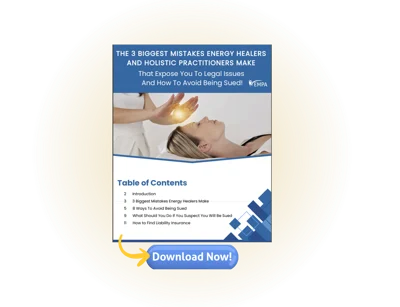
In the past, many energy healers were taught to focus almost entirely on the client. There wasn’t always guidance on what happens when your own energy becomes depleted, or how that can affect your work.Today, there’s a growing awareness that your energy, boundaries, and resilience are not separate from your professionalism—they’re a core part of it.
As you continue building your practice, the next step is learning how to recognize and avoid the most common risks practitioners face—before they turn into something bigger.
Download our free guide: 3 Biggest Mistakes Energy Healers Make (and How to Avoid Them) to strengthen your risk awareness, protect your practice, and move forward rested, restored, and ready for healing.
-1.png?width=223&height=176&name=Learn%20more%20about%20energy%20magazine%20(1)-1.png) This article was originally published in the July/August 2025 issue of Energy Magazine. As part of the ongoing EMPA column by Julie Bartrum and Katherine Krupka, these articles aim to support energy healers with common challenges and encourage clarity and confidence within their practice.
This article was originally published in the July/August 2025 issue of Energy Magazine. As part of the ongoing EMPA column by Julie Bartrum and Katherine Krupka, these articles aim to support energy healers with common challenges and encourage clarity and confidence within their practice.
Disclaimer: This article is for educational purposes only and does not constitute legal, medical, or insurance advice. Laws and coverage vary by state and policy. For legal questions, consult a qualified attorney. For insurance questions, refer to your policy language or provider.
Topics: