.png?width=1326&height=405&name=EMPALogo_final_white-01%20(1).png)

📌 EMPA Short Take:
Yes, you can practice most energy healing and energy medicine modalities in the U.S. without a professional license. However, requirements vary by modality and location, and some states regulate certain energy, touch-based, or holistic practices. Before offering services professionally, check your state and local requirements, stay within a clear scope of practice, follow applicable business laws, and carry appropriate liability coverage.
If you’ve ever wondered:
-
Do I need a license to legally practice energy healing?
-
Am I allowed to offer this work professionally?
-
Could I get in trouble for what I’m doing?
You’re asking the right questions!
Most people don’t enter this field trying to “push legal boundaries.” They’re here because they want to help—ethically, safely, and in a way that honors both the client and themselves.
When uncertainty creeps in about what’s allowed, what’s required, and what’s expected, it can feel unsettling.
The good news is this: most energy healing modalities in the U.S. do not require a professional license.
But here’s the nuance that matters:
Some specific modalities are regulated in certain states. And even when your work itself isn’t regulated, you are still operating a real-world business with real legal responsibilities.
So the real question isn’t simply, “Do I need a license?” It’s: Is the work I offer regulated where I live, and if it isn’t, how do I practice legally?
That’s what this article will help you understand.
.png?width=292&height=353&name=Can%20I%20Practice%20Energy%20Healing%20or%20Energy%20Medicine%20Without%20a%20License%20(1).png) What’s the Difference Between Regulated and Unregulated Professions?
What’s the Difference Between Regulated and Unregulated Professions?
In the U.S., a regulated profession is one where a state has created a licensing board and made it illegal to offer certain services without that credential. Medicine, psychotherapy, massage therapy, and acupuncture are classic examples.
An unregulated field is one where the state does not define your professional scope or require a credential to offer the work. Most energy healing modalities—such as Reiki, Healing Touch, biofield therapies, EFT, and similar approaches—are considered unregulated in most states.
However, there are important exceptions:
-
Some states regulate Reiki, or other forms of energy work under massage or bodywork laws (Florida is an example).
-
Some regulate acupressure, reflexology, or other touch-based practices.
-
A few are beginning to regulate sound or music-based modalities under mental health or therapeutic boards.
That’s why there is no universal yes-or-no answer!
Responsible practitioners will ask: Is my modality regulated in my state or city?
And there’s another layer that often gets overlooked:
Even when your modality is unregulated, you are still running a business. That means ordinary business laws still apply—such as:
-
Registering your business if required locally
-
Following zoning or home-occupation rules
-
Paying taxes
-
Complying with consumer protection laws
What’s different is that the content of your professional work isn’t defined by a licensing board. You’re likely not operating in a medical or mental health framework—but you are operating in the real world.
Unregulated does not mean unaccountable!
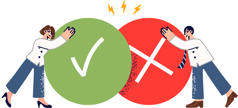 If Energy Healing Is Unregulated, Does That Mean “Anything Goes?”
Not at all.
In a licensed profession, the state sets your boundaries. In an unregulated profession, you must set them.
That’s why professional energy healers operate with intention and structure, even when the law may not require it. Professionalism is what creates safety, clarity, and trust.
Here’s what that looks like in practice.
.png?width=78&height=82&name=Can%20I%20Practice%20Energy%20Healing%20or%20Energy%20Medicine%20Without%20a%20License%20(2).png) 1. Define a Clear Scope of Practice for your Energy Modality
1. Define a Clear Scope of Practice for your Energy Modality
Even without a professional license, you are responsible for what you claim and how you work.
That means:
-
Avoiding language that implies you diagnose, treat, or cure medical or psychological conditions
-
Stating clearly that your services are complementary and not a substitute for licensed care
-
Referring clients out when their needs fall outside your training or role
-
Staying rooted only in the modality (or modalities) you’re trained in, regardless of when clients share their health concerns
Staying in scope protects your clients, and it protects you.
💡Scope issues rarely feel obvious until someone questions what you said or implied. Read: Have You Crossed the Line? Scope of Practice for Energy Healers
2. Establish Clear Boundaries and Ethics
Energy work often involves vulnerability, emotional openness, and sometimes physical proximity.
Professional practitioners:
-
Obtain informed consent before the first session
-
Explain what clients can expect, including whether touch is involved
-
Respect autonomy, privacy, and comfort at all times
-
Avoid dual relationships or behavior that could be misinterpreted
-
Clearly state policies around payment, rescheduling, and cancellation
Boundaries create the safety that allows trust to grow. When your expectations are clear and consistent, clients can relax into the experience knowing they’re in good hands.
💡Being kind is part of your practice—but when does it cross into overgiving? Learn how to stay generous and grounded in Energetic Boundaries With Clients: Can You Really Be “Too Nice?”
3. Use a Code of Ethics for your Work
In the absence of a governing board, your Code of Ethics becomes your anchor.
A strong Code of Ethics communicates:
-
How you handle confidentiality
-
What clients can expect in sessions
-
How you approach consent and boundaries
-
How communication works
-
What professionalism looks like in your practice
At EMPA, we provide members with a customizable Code of Ethics template and encourage its use as part of client intake. It’s one of the simplest ways to show that your work is credible, thoughtful, and grounded.
💡 Your clients can’t read your mind—but your Code of Ethics can set the right expectations. Read: Code of Ethics for Energy Healers: Best Practices for a Safer Practice
4. Carry Liability Insurance for Your Healing Practice
Even in an unregulated field, you need legal and financial protection.
Liability insurance:
-
Signals professionalism
-
Protects you if a client misunderstands your work
-
Is often required by landlords, wellness centers, or event hosts
-
Provides defense even when a claim is unfounded
EMPA offers bundled professional and general liability coverage and a membership program designed specifically for energy practitioners—whether you practice Reiki, Healing Touch, Biofield Tuning, or another recognized modality.
💡Liability claims may be rare—but their impact isn’t. Understand the real risks and protections in Is Liability Insurance Really Worth It for Energy Healers?

.png?width=227&height=326&name=Can%20I%20Practice%20Energy%20Healing%20or%20Energy%20Medicine%20Without%20a%20License%20(3).png) What’s Next: Practice Energy Healing Safely and Ethically
What’s Next: Practice Energy Healing Safely and Ethically
You may not need a professional license to practice energy healing—but you do need a professional container.
That container is built from:
-
Knowing whether your modality is regulated in your location
-
Following basic business laws in your area
-
Staying in a clear scope of practice
-
Setting ethical boundaries
-
Documenting expectations
-
Carrying the right protection
We’ve worked with thousands of energy practitioners who run ethical, legal, and sustainable practices without formal licensure. There is a path forward.
You don’t need to have everything figured out today. Start with the basics:
-
Check your local and state rules
-
Put your policies in writing
-
Make sure your insurance covers what you offer
💡Want help avoiding the most common mistakes we see practitioners make?
Download our free guide: The 3 Biggest Mistakes Energy Healers Make (and How to Avoid Them)

 Frequently Asked Questions
Do I need a license to practice energy healing?
In most cases, no. Most energy healing modalities are unregulated in the U.S. and do not require a professional license. However, regulations vary by state and modality, so always check the requirements where you practice.
Are any energy healing modalities regulated?
Yes. Some states regulate certain energy, touch-based, or holistic modalities, including some forms of Reiki, acupressure, reflexology, and other hands-on practices like massage. A modality that doesn't require a license in one state may have different requirements in another.
Can I charge clients for energy healing without a license?
Generally yes, if your modality does not require a license where you practice and you stay within your scope. You are still operating a business, so requirements involving business registration, taxes, zoning, consumer protection, and other state or local laws may apply.
Do I need professional liability insurance if energy healing isn't licensed?
Being unlicensed or unregulated does not mean you're free from professional risk. Appropriate insurance coverage can help protect you if a claim arises and may also be required by landlords, wellness centers, or event hosts. Make sure your liability insurance covers all the specific modalities and services you offer.
How do I find out if my modality requires a license?
Check the state and local laws where you practice, including regulations that may apply to massage, bodywork, touch-based services, or other related professions. If the requirements aren't clear, consult a small business attorney familiar with professional licensing laws in your state.
Disclaimer: This article is for educational purposes only and does not provide legal, financial, or medical advice. Examples are general, and coverage may vary by policy. Always refer to your insurance provider or policy language for specific details, as policy terms take precedence. For legal concerns related to your practice, consult an attorney.
Topics: