
.png?width=1326&height=405&name=EMPALogo_final_white-01%20(1).png)

📌 EMPA Short Take:
As your healing practice evolves, you may decide to add another modality. When you do, consider how it will fit into your professional practice, including how you structure your services, communicate with clients, maintain your training, update your business, and protect your work with liability coverage.
Is another healing modality the next step for your practice? If you add one, what will actually change about the way you run your business and work with clients?
At EMPA, we see practitioners’ work evolve as they gain experience and explore new approaches, and many of the energy healing practitioners we work with are trained in more than one modality. But adding a modality to your professional practice involves more than adding another technique to your toolkit.
Understanding what comes with that decision can help you integrate a new modality intentionally, rather than discovering afterward that your services, client communication, training, business materials, or liability coverage also need attention.
In this article, we’ll compare one-modality and multi-modality practices, then walk through what changes when you add another modality and what to consider before you begin offering it professionally.
 Why Do Healing Practitioners Add Modalities to Their Practice?
Adding modalities can give practitioners more ways to shape their work, explore their interests, and develop the kind of practice they want to build.
Energy healers are often curious learners, and it’s common for their work to transform as they discover new approaches that interest them.
EMPA’s Executive Director, Katherine Krupka, is a great example: she practices more than a dozen modalities herself.
How those modalities become part of a practice can look very different. One practitioner might build an entire career around Healing Touch, while another practices Reiki and massage therapy. Someone else may draw from medical intuition, chakra balancing, spiritual healing, and other approaches they’ve learned over time, and blend them into something unique.
Here’s how building around one modality versus multiple modalities can shape different areas of your practice:
| Area of Your Practice | One Healing Modality | Multiple Healing Modalities |
| Training & education | You can concentrate on continuing education, practice time, and skill development within one approach. Growth may mean going deeper rather than adding something new. | Your learning is spread across different approaches. As you add modalities professionally, you’ll want to stay current and competent in each one you continue to offer. |
| How you build services | You can still create different service types, session lengths, teach classes, or have other experiences without adding another modality. One modality doesn’t have to mean one service. | You have more choices and possibly a broader range of skills to draw from: offer modalities separately, combine them within a session to create an approach unique to you, or build services around complementary approaches. |
| What clients need to understand | Clients primarily need a clear picture of what the modality is, what you offer, and what they can expect from working with you. | Clients may also need help understanding the differences between your modalities, why they might choose one over another, or what you're combining within a service. |
| Day-to-day management | Your forms, website, credentials, and service descriptions can stay focused around one approach, although they’ll still need updating as your practice changes. | Adding a modality may trigger a few updates—such as a new service description, pricing, credentials, intake/consent information, or website copy. |
| Room to evolve | Growth can mean developing greater depth, experience, new applications, or new ways of offering the modality you already practice. | New modalities can give you additional ways to shape your work, and over time your particular combination of approaches may become distinctive to your practice. |
With one healing modality, more of your training, services, and business can stay centered around that approach.
With multiple modalities, you have a broader range of approaches to work with—and a few more things to consider as you decide how each one fits into your professional practice.
Where you take your practice is up to you! You can build around one modality, add new ones as your interests and skills develop, or even reduce modalities to a speciality in the future.
There’s plenty of room to build a practice that reflects how you want to work.
💡Still deciding what kind of practice feels right for you? Read Generalist vs. Specialist: Are You a Jack of All Trades or a Master of One to explore how each approach can shape your practice.
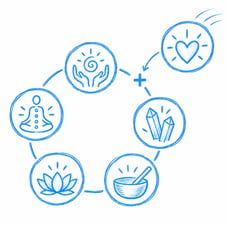 What Changes When You Add Another Healing Modality?
Adding a new modality can be an exciting step in your practice! When you’re ready to bring something new into your professional practice, there are a few things worth considering.
 Decide How You’ll Offer the New Modality
Before you begin offering a new modality, decide what role you want it to play in your practice.
Will it be a standalone service clients can book? Will you combine it with other modalities within an existing service? Could you teach it through a class or workshop?
Make Sure Clients Know What They’re Booking
Once you know how you’ll use the modality, look at your practice from a client’s perspective.
Can they easily tell what each service is and what to expect in a session? If you combine modalities within a session, is that clear? If they have several options, do they understand the differences well enough to choose?
Update What the New Modality Affects
Depending on how you plan to offer it, you may need to update your:
-
Website and service descriptions
-
Pricing or scheduling
-
Intake and consent forms
-
Credentials and professional bio
-
Client agreements (including your scope of practice)
Keep Your Training Current
Once you offer a modality professionally, you’re responsible for practicing within your training and competence.
That may mean continuing education, additional training, maintaining certification when applicable, or staying current with relevant professional standards.
Confirm the New Modality Is Covered by Your Professional Liability Policy
Before offering the modality professionally, confirm that the modality and how you’ll use it fall within your professional liability coverage. Just because your existing modalities are covered doesn’t automatically mean a new one will be, so it’s worth checking before you begin offering it to clients.
Consider more than the modality name. Individual sessions, groups, classes, workshops, remote work, and teaching can all be relevant when determining whether your professional activities are covered.
💡 Want to learn more about the cost side? Read Does It Cost More to Insure Multiple Holistic Healing Modalities? to learn how adding modalities can affect professional liability coverage and pricing.
Check Your State and Local Requirements
Most energy healing modalities are generally unregulated and don’t require a license, but that isn’t true of every modality or every location.
When adding something new to your services, check the state and local laws that apply where you practice. Some modalities, such as massage therapy, may require professional licensure depending on the state, along with specific regulations or other requirements.
If you’re unsure of where to start, contact a local small business attorney for support.
💡 Do you hold a professional license in addition to practicing energy healing? Read Special Considerations for Energy Practitioners who are also Licensed Professionals to understand the important boundaries between your licensed and non-licensed work.
 What’s Next: Build the Practice You Want to Grow Into
The practice you have today may look very different from the one you started with—and different again a few years from now. As you gain experience and explore new interests, your practice can take shape alongside you.
If adding another modality feels like the right next step, you now know that the decision involves more than learning a new technique. You’ll want to think through how it fits into your services, what your clients need to understand, what needs updating, and what professional requirements come with offering it.
With those pieces in mind, you can add new modalities intentionally and in a way that fits the practice you’re building.
Your practice gets to evolve with you. As your interests and expertise grow, you can continue shaping your work into a practice that feels distinctly yours.
💡 Ready for Your Next Step? As you build the practice that’s right for you, make sure your modalities are covered along the way.

 Frequently Asked Questions
Will adding more modalities make my practice too complicated?
Probably not. Each modality can add a few things to manage, but for most practitioners, it’s an adjustment, not an overhaul.
Do I need more modalities for my practice to grow?
Not necessarily, though many healers do tend to choose to offer or blend multiple techniques. Depending on what you want to do, you can build your practice around one modality or add others. Both approaches offer plenty of room to grow.
What should I do before adding a new healing modality to my practice?
Make sure you have the appropriate training, check any state or local requirements, decide how you’ll offer the modality, and confirm that it falls within your professional liability coverage.
Disclaimer: This article is for educational purposes only and does not provide legal, financial, or medical advice. The examples are general, and coverage may vary by policy. Always refer to your insurance provider or policy language for specific details, as the policy terms take precedence. For legal concerns related to your practice, consult an attorney.
Topics: