.png?width=1326&height=405&name=EMPALogo_final_white-01%20(1).png)

📌 EMPA Short Take:
You don’t need to have every detail figured out before you begin. Be clear about the healing work you offer, organize your business from the ground up, have your forms and policies prepared, protect your work with professional liability insurance, and make it easy for people to find you and work with you. With those foundations in place, you’re ready to open your doors and start doing the work you’ve prepared for.
You’ve spent time learning your work, practicing your skills, and imagining the people you may one day serve. When you feel that pull to begin your own healing practice, how do you know when you’re ready to welcome someone into your care?
What needs to be in place so you can take that step feeling grounded, prepared, and empowered in the way you care for your clients and build your budding business?
At Energy Medicine Professional Association (EMPA), we work with energy healing and holistic practitioners at many stages of building their businesses, including those preparing to see their first clients. We’ve found that new practitioners can put a lot of pressure on themselves to have everything “just right” before they begin, when the things that matter most are often foundational basics.
In this article, you’ll walk through those basics and the essential steps that turn your healing work into a practice that’s ready for clients, from getting the business basics in place and preparing your paperwork to thinking through the client experience and protecting what you’re building.
 First, What Will You Offer Your Clients?
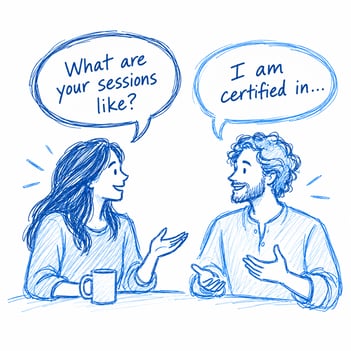
When your healing work feels natural to you, putting it into words for someone else can be surprisingly difficult. You may know exactly what you do and what makes it so potent, yet find yourself searching for the right words when someone asks, What do you do for work? or What happens in a session together?
Fortunately, you don’t need a corporate elevator pitch! You do need an offer that feels natural, approachable, and most importantly, accurate when you talk about your work.
Start with the modalities you practice. That could be Reiki, spiritual healing, medical intuition, sound healing, chakra balancing, or the use of multiple modalities.
Then think about the boundaries around that work: What do you do in a session? What don’t you do? When might someone need professional support outside of what you provide?
At EMPA, we call this your scope of practice. Having a clearly defined scope helps you stay within the boundaries of what you’re qualified to do, reducing liability risk while setting clear expectations for your clients.
One place we see scope-of-practice concerns arise is in the language practitioners use to describe their work. The word ‘healing’ itself is a good example. Describing a session as a healing experience is very different from promising that a session will heal a specific illness or condition.
More obvious medical terms such as ‘diagnose,’ ‘treat,’ and ‘cure’ should also be avoided by non-licensed practitioners. EMPA has supported members who have faced complaints alleging they were practicing medicine without a license, making this more than a matter of word choice.
The language you use should accurately reflect the boundaries of the work you’re qualified to provide.
💡Here is a general example of what a simple scope of practice statement might look like:
I offer Reiki energy healing sessions to support relaxation, stress reduction, and overall energetic balance. Reiki is a complementary wellness practice. It is not a substitute for medical care. I do not diagnose medical conditions, prescribe treatment, or claim to cure, prevent, or treat any disease. Clients are encouraged to consult a licensed healthcare provider for any medical concerns. My role is to facilitate a supportive, calming energetic environment that encourages relaxation and self-awareness during the session.
Your scope-of-practice statement typically becomes part of your client intake agreement, giving you and your client a shared understanding of your work before you begin together.
Once you can comfortably say, This is what I offer, this is what you can expect from me, and this is where my work ends, you’ve taken an important first step toward readying your healing work as a professional.
 Second, How Will You Turn Your Healing Work Into a Real Business?
Calling yourself a healer may feel natural among people who understand this work. Saying, I own an energy healing practice, can feel very different.
Maybe you’ve wondered how someone will respond when you tell them what you do. Will they misjudge? Will they dismiss it as “woo-woo” or placebo? Will they assume this is something you do on the side rather than a career you’re intentionally building?
You’re allowed to take your healing work seriously. Choosing to build a professional practice around it means giving the work you’ve trained for the same thoughtful structure you would expect from any other business.
This is where your practice begins to take shape beyond the modalities themselves. Business names, registrations, bank accounts, and bookkeeping may not be the pieces that inspired you to become a healer, but they give you a framework from which you can operate.
Start by making a few foundational decisions:
- Choose a business name that represents your practice and the work you want to share.
- Decide where you’ll practice. You might welcome clients into your home, rent an office or studio, offer virtual sessions, travel to clients, or combine several approaches.
- Check your state and local requirements. Depending on where and how you practice, you may need to consider business registration, permits, zoning requirements, or other local rules.
- Choose a business structure. Determine whether operating as a sole proprietor, forming an LLC, or choosing another structure makes sense for your circumstances.
- Set up your financial basics. Decide what you’ll charge, how clients will pay you, and how you’ll track income and expenses. You’ll probably also want to set up a dedicated business bank account.
💡Many healers start out as sole proprietors and choose to become an LLC later. Which structure is right for you? Read: Should I Form an LLC for My Energy Healing Practice?
Some of these steps may feel unfamiliar, even a little bureaucratic. While you don’t need to have all the answers right away, it is important to take the time to learn what applies to your business as you go.
Make each decision one at a time, knowing that you’re creating the foundation that allows you to step forward not only as a healer, but as a professional with a business you can confidently call your own.
 Third, What Paperwork And Policies Should You Have Before Seeing Clients?
It’s important to establish clear agreements that support you and your clients before you start seeing them. Paperwork gives you a place to establish that understanding. You don’t need a mountain of forms; you need a few documents that support the relationship you’re creating with each client.
For most new practices, your client paperwork will include:
- An intake form: Collect the basics you need to work with someone, such as their contact information, emergency contact, and relevant wellness history, if applicable.
- Informed consent: Give your client the information they need to understand and consent to the services you’ll provide. This is also a natural place to include the scope-of-practice statement we talked about earlier.
- Disclaimers: Clearly communicate appropriate limitations of your services so your client knows what they should and should not expect from your work.

How Will You Handle Cancellations, Payments, and Client Expectations?
In addition to the above, you’ll also want to decide how your practice will handle some common situations ahead of time, rather than trying to figure out what feels fair in the moment. Your basic policies might cover cancellations, no-shows and late arrivals, payments and refunds, confidentiality, and any special considerations when working with minors, older adults, or individuals with special needs (if applicable).
💡Here is an example situation:
You decide, and include in the written practice policies you share with clients, that a client arriving late for a one-hour session will only receive the remaining time in their scheduled session rather than a full hour. You now have something consistent to lean on when it happens. You’re not creating a rule for one particular client or making an awkward decision on the spot.
 How Will You Protect Your Clients’ Privacy?
Confidentiality deserves particular care. EMPA has seen what can happen when practitioners share client experiences publicly without appropriate permission.
In one situation, a practitioner posted about the results of a client session on social media. Someone who knew the client recognized the circumstances and contacted them, despite the fact that the post did not mention names.
The practitioner had violated the client’s privacy and harmed their own professional reputation as a result.
Even when you’re excited about someone’s experience, their story is still theirs to share. Having a clear confidentiality policy and getting written permission before sharing client experiences, testimonials, or other information helps you honor the trust someone places in you when they step into your care.
How Can You Create The Forms Your Practice Needs?
Creating your own forms can take some research. You’ll need to determine which documents apply to your practice, understand your state and local requirements, and adapt the language to the way you work. When you’re unsure about legal language or requirements, consider consulting a qualified legal professional.
You can also use templates designed specifically for energy healers. EMPA members have access to templates for informed consent, referrals, testimonial permission, hold-harmless language, disclaimers, and more.
💡EMPA’s very own Executive Director, Katherine Krupka, says she wishes she’d had these resources when starting her own practice. She spent hours figuring out what she needed, what she didn’t, and how to phrase it—and says she would have gladly paid a hefty sum for that kind of head start!
 Fourth, How Will You Protect Yourself, Your Clients, And Your Practice?
As you get closer to welcoming your first clients, there’s one more part of your foundation to consider: what protection should be in place before you begin?
Even when you practice ethically and responsibly, accidents, misunderstandings, and claims can and do happen.
For that reason, you will want to have professional and general liability insurance before you begin seeing clients. Professional liability can help protect you against claims related to the services you provide, while general liability addresses risks such as a client being injured at your place of business.
💡Looking for a deeper understanding on liability insurance for energy healers? Check out this article next: What Kind of Insurance Do Energy Healers Need?
You also don’t have to wait until your practice feels “official” to get insured. EMPA sees practitioners obtain coverage while they’re still students, practicing with friends and family, or preparing to accept their first paying clients. EMPA, along with some other providers, offers student or introductory rates that can make coverage more affordable while you’re getting started.
If you’re already practicing with other people, protection is worth considering now.
Being ready to start your practice doesn’t mean eliminating every possible risk; working with the public is unpredictable. It is best to understand the risks that come with the practice you’re creating and put protection in place before you step forward. That’s one more piece of your foundation you can feel confident checking off your list.
 Fifth, Is Your Practice Ready to Welcome Clients?
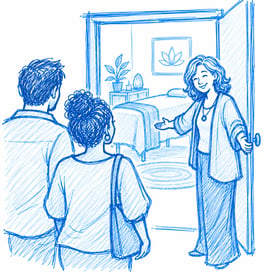
You’ve made some of the key decisions and put the foundation in place. Now comes the exciting part: getting ready to welcome someone into the practice you’ve created!
This is also where it’s easy to tell yourself you need one more thing before you can begin. A better website…a more beautiful healing room…another certification.
New practitioners often ask us about these kinds of finishing touches when they’re preparing to start. But they aren’t necessarily what determines whether you’re ready to work professionally with clients. You don’t need every bell and whistle right out of the gate. Instead, consider the essentials.
At a basic level, someone should be able to find you, understand what you offer, book a session, complete their forms, know what to expect, and pay you.
 What Does Your Healing Space Need?
Whether you work in person or virtually, create a space that supports the experience you want to offer.
For in-person sessions, that might mean a healing table or chair, a place for belongings, the tools you use in your modality, blankets or bolsters, tissues, water, and cleaning supplies.
For virtual work, you need a reliable phone or internet connection. If you’re video conferencing, you’ll need a camera and microphone, a secure platform, and a private space where you can be fully present.

How Will Your Client Move Through a Session With You?
Picture your client walking through the experience. How will you welcome them? How will you help them settle into the session? How might you set things up to facilitate their relaxation and openness to the work at the start of the session? How would you like them to feel at the end of the session?
Your flow will depend on your modalities and the experience you want to create. You might allow quiet time to settle in at the beginning and leave space for grounding and integration before your client leaves.
Thinking through that journey beforehand can help you feel more present when your client arrives.
Do You Have Your Online Systems in Place to Begin?
Before you open your calendar to clients, make sure you have a simple way for them to move through the practical side of working with you. At minimum, consider having:
-
A website or online presence where people can find you and understand what you offer
-
A calendar or scheduling system for booking sessions
-
A payment method for accepting and tracking payments
-
Digital client forms if you plan to complete or store paperwork online
These systems don’t have to be elaborate. If your clients can easily find you, book with you, and pay you, you are in good shape!
💡As your practice grows, the right systems can make the day-to-day work feel much easier. Read Helpful Online Tools and Systems for Your Healing Practice to explore options for scheduling, payments, client management, and more.
So, Are You Ready to Start Seeing Clients?
You’ve now worked through the foundations of getting your practice prepared. You’re likely ready to begin seeing clients when you can answer “yes” to these five questions:
-
Can I clearly explain what I do and don’t do? You understand your scope of practice and can communicate it clearly to clients.
-
Have I set up my business appropriately? You’ve addressed the legal, financial, and local requirements that apply to your practice.
-
Do I have the client forms and policies I need? You have the essential paperwork and processes in place for working with clients.
-
Do I have appropriate liability protection? Your professional and general liability coverage reflects the modalities you practice and the ways you work with clients.
-
Can a client easily work with me? They can find you, understand what you offer, book a session, complete their forms, and pay you.
If you can’t answer “yes” to all five yet, the questions you answered “no” to show you where to focus next. You may be closer to opening your practice than you think; you can do this!
 What’s Next: Are You Ready To Start Your Holistic Healing Practice?
When you first imagined opening your practice, you may have felt excited about serving clients while also wondering whether you were truly prepared for everything that comes with it. There’s a big space between learning energy healing and saying, I’m ready to welcome clients to my business.
Now, you know what belongs in that space. You’ve thought through what you offer, the business behind your work, your client paperwork and policies, the protection you need, and the experience you want to create for the people who come to you.
Readiness isn’t one giant leap; it’s a series of decisions that turn the modalities you love into a profession.
Your next step is to look at what you already have in place and identify what still needs your attention. Work through those remaining pieces one at a time, then give yourself permission to begin.
As you get ready to welcome clients, knowing what to avoid can be just as helpful as knowing what to put in place. Download our free guide, 3 Biggest Mistakes Energy Healers and Holistic Practitioners Make, to learn three common mistakes to watch for and practical ways to avoid them.

You’ve prepared for this work. Now you can create a practice that reflects the healer and professional you’ve worked so hard to become!
 Frequently Asked Questions
What Does A Holistic Healer Need Before Starting A Practice?
You don’t need everything figured out. Focus first on the foundations that help you work responsibly: a clear offer, proper business setup, client forms and policies, appropriate insurance, and a thoughtful client experience.
Do Healers Need Professional Liability Insurance When Practicing With Friends Or Family?
It’s wise to consider coverage even before you accept paying clients. Accidents and misunderstandings can happen while practicing with friends, family, or training clients, and many practitioners choose coverage while they’re still students.
What Kind of Liability Insurance Should I Consider for My Healing Practice?
Professional and general liability insurance address different risks in your practice, and this is a great place to start. You may also want to look for comprehensive coverage that protects the different parts of the work you do. EMPA provides comprehensive coverage that includes both professional and general liability for energy healers.
What Client Policies Should an Energy Healer Have In Place?
Consider policies for cancellations, late arrivals, payments and refunds, confidentiality, and any special client situations relevant to your practice. Establishing them early gives you something consistent to rely on instead of deciding what to do after a problem arises.
Can I Start Seeing Clients Before I Have a Website?
Yes. You don’t necessarily need a full website before you begin seeing clients, though most practitioners do eventually build one. Most importantly, you will want a clear way for people to find you, understand your offerings, book with you, know what to expect in their session, and pay you.
Do I Need an LLC to Start a Holistic Healing Practice?
No, forming an LLC is not necessarily required to start a holistic healing practice. The business structure that makes sense for you depends on factors such as your business needs, tax considerations, and the level of liability separation you want. Read: Should I Form an LLC for My Energy Healing Practice? for a closer look at the differences and what to consider.
What Language Should Healers and Holistic Practitioners Avoid When Describing Their Services?
Be careful with medical language that could misrepresent your scope of practice. EMPA advises energy healers to avoid terms such as “cure,” “patient,” “treatment,” “diagnose,” “treat,” and “prevent” and clearly explain instead what your services offer and where your boundaries lie.
Resources:
- https://www.sba.gov/counseling/launch-your-business/
- https://www.ftc.gov/business-guidance/resources/health-products-compliance-guidance
Disclaimer: This article is for educational purposes only and does not provide legal, financial, or medical advice. The examples are general, and coverage may vary by policy. Always refer to your insurance provider or policy language for specific details, as the policy terms take precedence. For legal concerns related to your practice, consult an attorney.
Topics: