.png?width=1326&height=405&name=EMPALogo_final_white-01%20(1).png)

📌 EMPA Short Take:
Energy healing and energy medicine are both commonly used to describe this field today, with considerable overlap in how the terms are used. Whatever you call your work, choose language that accurately represents what you do and stays within your professional scope. As the field of energy healing and holistic wellness continues to shift and gain attention, staying informed can help you speak about what you do comfortably and safely.
Do you call what you do energy healing or energy medicine? Have you ever stopped to think about what those words tell someone about your practice?
Both terms are commonly used across the field, often interchangeably. You’ll also hear biofield, subtle energy, energy work, energy balancing, along with the names of specific modalities. The language is evolving, and there’s no way to know which terms may gain broader acceptance (or fall out of favor) in the years ahead.
But there is something we can be thoughtful about right now: the language we use to describe it.
The words on your website, business card, service descriptions, and even in conversations with clients help shape how people perceive your offer. Some words can also carry medical or professional implications that may not fit your credentials or scope.
So, what should you call what you do? And how can you describe it clearly without stepping beyond your boundaries?
In this article, we’ll consider why the language around energy healing is shifting, what other terms are emerging, and how to make thoughtful choices about the way you describe your work—including language practitioners should avoid.
 So, Are Energy Healing and Energy Medicine the Same Thing?
There isn’t a universally agreed-upon definition that clearly separates energy healing from energy medicine. The more interesting distinction may be what each term communicates.
Take the word medicine. Many people who offer energy healing are not licensed or regulated healthcare professionals.
Many energy-based modalities are practiced as complementary approaches outside mainstream healthcare. Recently, some have come to wonder: does energy medicine accurately describe this alternative healing industry? Could the word medicine suggest something different to a client?
There isn’t one answer for every practitioner, modality, or setting. We also don’t know how professional thinking around these terms may change in the years ahead.
What we do know is that presently the terms energy healing and energy medicine are essentially describing the same thing: a broad range of practices based on working with, balancing, or influencing the body’s energy or biofield to support well-being.
If this definition sounds like what you do, then you likely fall under the umbrella of energy healing/energy medicine.
As we move forward, keep in mind that the potential flux in terminology is important to pay attention to. Not because you need to abandon the phrasing you use today, but because the words we choose shape how others understand energy work and can help keep it (and you!) safe.
 How Can the Language You Use Affect Your Energy Healing Practice?
The words you use to describe your services do more than help potential clients understand what you offer. They can also set expectations about your role, your qualifications, and what someone should expect from a session.
For example, there’s an important difference between saying you offer Reiki to support relaxation and well-being and suggesting that Reiki can treat anxiety, prevent illness, or cure a health condition.
The first describes your service and its intended supportive role. The second makes claims that can cross into the language of licensed healthcare—and may go beyond your professional scope. That can create real risk, from misleading clients about what you’re qualified to provide to potentially running afoul of state laws or regulations governing medical claims.
It may also create problems with your professional liability coverage if you’re providing or advertising services outside your covered scope.
Your title can communicate something, too. A title such as energy healer or holistic practitioner can shape what clients expect from you, while certain terms, such as therapist, is typically reserved for licensed professions and require specific credentials depending on where you practice. That’s why it’s worth asking a few basic questions about the language you use:
-
Does it accurately represent my training and credentials?
-
Could a client misunderstand what I’m qualified to provide?
-
Am I making claims about health conditions or outcomes?
-
Is the terminology I’m using appropriate under the laws and regulations where I practice?
That last question is especially important because requirements can vary by location and by the services you provide. If you’re unsure whether your title, business name, service descriptions, or marketing language comply with applicable laws and regulations, talk with a qualified legal professional in your state or jurisdiction.
Choosing your language thoughtfully is one of the best practices that helps protect both you and your clients while setting clear expectations from the start.
💡 Some titles carry specific professional and licensing implications. For a closer look at “therapist” and why energy practitioners should be careful about using it, read Why Energy Healers Shouldn’t Use the Title “Therapist” Without a License.
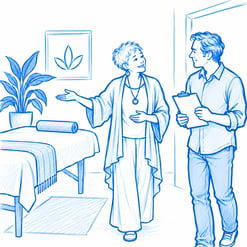 How Can You Describe Your Energy Healing Services?
Knowing which words deserve caution is helpful, but you still need language that feels natural when someone asks, “So, what do you do?”
Start with what you offer, how you approach it, and the experience you intend to support. Depending on your modality and training, that might sound like:
-
I’m a Reiki practitioner who offers energy sessions designed to support relaxation and overall well-being.
-
I offer energy healing sessions intended to help clients feel more grounded and at ease.
-
I use spiritual healing and flower essences as a complementary approach to supporting overall wellness.
-
I’m an energy practitioner who helps clients explore greater connection with their physical, emotional, and energetic well-being.
You can take the same approach when describing potential benefits. Phrases such as: support relaxation, promote a sense of well-being, encourage balance, or clients often report feeling calmer after a session describe the experience without promising a particular result.
Most importantly, choose language that sounds like you and accurately reflects the services you provide. You don't need medical-sounding terminology to communicate the value of what you offer!
💡 For a deeper look at how to describe your services, including examples of language to use with care, read What You Can and Can’t Say in Your Marketing as an Energy Practitioner.
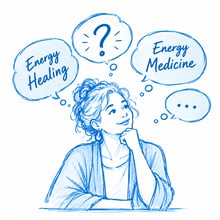 What’s Next: Stay Curious About the Language You Use
The language around energy healing may look different five or ten years from now. Energy healing and energy medicine may remain the familiar umbrella terms, other terms may become more common, or new vocabulary may emerge as the field continues to develop.
For now, pay attention to the words you choose and what they communicate. Does your title feel true to the services you provide? Would a new client understand your role? Does the way you describe a session give them a clear idea of what to expect?
You don’t have to predict where the profession is headed to make thoughtful choices today. Keep learning, stay aware of changes in your field and your local requirements, and be willing to reconsider your language as new guidance emerges.
Perhaps keep this question in the back of your mind: what do you think the future has in store for energy healing?
At EMPA, we’ll be paying attention right alongside you. Subscribe to the EMPA newsletter to stay connected to conversations, resources, and updates that can help you navigate the profession as it continues to grow.
💡If you’re ready to dig deeper into safe, ethical professional practice, EMPA member can explore the Safe Practice Certificate Course – for free! Practitioners who complete all eight modules and earn at least 75% on each quiz receive an EMPA Safe Practitioner Certificate and digital badge.
 Frequently Asked Questions
Is energy healing the same as energy medicine?
Today, energy healing and energy medicine are commonly used as broad umbrella terms for energy-based practices, with considerable overlap in how they’re used. There isn’t a universally agreed-upon definition that clearly separates one from the other.
What should I call myself as an energy healer?
Choose a title that accurately reflects your training, modality, and services. Depending on what you offer, that might include energy healer, energy practitioner, holistic practitioner, or a modality-specific title such as Reiki practitioner. Be cautious with titles associated with licensed professions, such as "therapist," unless you hold the appropriate credentials.
Is the terminology around energy healing changing?
Yes. Energy healing and energy medicine remain commonly used industry terms, while language such as biofield, subtle energy, energy balancing, and modality-specific titles are also being used across the field. There’s no way to know which terms will become more or less common over time, so practitioners should stay informed and periodically consider whether the language they use still reflects their practice clearly.
Disclaimer: This article is for educational purposes only and does not provide legal, financial, or medical advice. The examples are general, and coverage may vary by policy. Always refer to your insurance provider or policy language for specific details, as the policy terms take precedence. For legal concerns related to your practice, consult an attorney.
Topics: