.png?width=1326&height=405&name=EMPALogo_final_white-01%20(1).png)

✏️ Editor’s Note:
What happens when the healing practices you've believed in for years finally begin receiving scientific validation?And once that validation arrives, does it give practitioners more freedom—or more responsibility?
Attorney and energy practitioner Ian Foster explores an important reality facing the holistic healing community today: as energy medicine gains visibility and credibility, practitioners must be even more mindful of legal boundaries, ethical marketing, and professional conduct.
In this article, you'll learn how to discuss research responsibly, avoid common legal pitfalls, and embrace the growing legitimacy of the profession without overstepping your role.
 For so many of us in the realm of energy and holistic practice, it’s been obvious for a long time that what we do works. We see it in ourselves and our clients every day. The transformations we witness are powerful, beautiful, and above all real.
And yet we have lived on the margins of the broader healing/healthcare landscape, frequently misunderstood and sometimes dismissed outright, because it’s not always easy to point to the science behind what we do.
We have tolerated living on the margins (sometimes even reveling in the freedom it gives us!) because we have remained committed to our industry and our clients, trusting that the science would catch up.
Well, now the science is catching up. There is real, empirical evidence showing measurable benefits from the practices once considered “alternative.”
As we discussed in a recent column, hospitals are building integrative medicine departments, researchers are asking insightful questions, and our clients are finding language to describe their experiences in a way that bridges science and spirit. The integration of mainstream western healthcare and energy medicine is happening because of the research, not in spite of it.
If I’m being completely honest, speaking from my perspective as an attorney who serves energy practitioners and as a practitioner myself…this all feels very validating. I’m feeling seen, encouraged, and even vindicated.
It’s a nice emotional state to sit in and appreciate…yet I’m not going to let that emotional state lead me to complacency in what I do and how I serve.
Because here’s the reality: with this long-overdue validation comes responsibility. And the more validated our practices become, the more legal and ethical responsibility we have.
As we gain legitimacy we also gain visibility. In turn, visibility invites more scrutiny. The things we say, the methods we use to market our services, and the public positions we take, all now matter more, not less, owing to scientific validation of our work.
This is not the time for our industry to backslide when it comes to law and ethics. This is our moment to mature; to put on our big-kid pants and show that we belong at the grownups’ table.
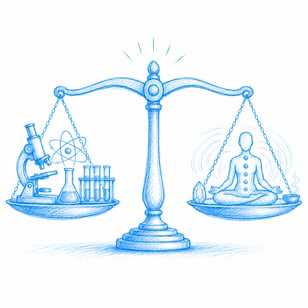 Be Mindful of Overreach
When research suggests that an energy modality works as claimed, we might feel tempted to celebrate or even to say “I told you so.” After all, we’re justifiably excited!
But the fact remains that most energy healers are not licensed medical providers and research validation does nothing to change that.
Even if studies show measurable benefits, you are still not authorized to diagnose conditions, prescribe treatment, adjust medications, or claim to cure disease. Keep in mind that even licensed physicians are careful about overstating the results of studies, and we should be just as careful, if not more so.
Overstating or overhyping research findings creates legal exposure. It invites allegations of illegally practicing medicine or engaging in false advertising. Regulatory agencies care about these things, and if we don’t police ourselves, the government will step in and do it for us.
Beyond the actual legal risk, we have our ethics to consider. Inflated claims may encourage clients to delay or abandon medical care that is otherwise appropriate and beneficial for them. We risk creating unrealistic expectations. And we undermine the trust that we are trying to nurture between the holistic and licensed industries.
Scientific support for our work is great and should be welcomed! And we should talk about it! Though let’s remember to keep in mind that it does not expand our legal scope.
 Testimonials Vs. Data
There is a saying in the scientific and research communities: “The plural of anecdote is not data.” This conveys that no amount of anecdotal stories and testimonials will supplant real data gathered in a controlled setting.
Thus, let’s be responsible in how we treat testimonials.
If your practice is like mine, then you have powerful client stories and many of those clients want their stories shared. Some clients’ lives shift dramatically and they are eager for you to share their testimonials so that others may experience the same results.
Now, I’m not here to diminish your client testimonials. Quite the contrary…lived experience matters and real-life client stories matter. Human transformation cannot be reduced to a laboratory measurement.
Still, testimonials are not scientific evidence, and anecdotes do not establish generalized outcomes. A powerful story from one client does not mean others will experience similar results.
From a legal perspective, testimonials can imply claims that we don’t really mean to make, and we can be held legally and ethically accountable for those claims. It won’t be a defense to say, “It’s my client who said it, not me.”
If a testimonial on your website says, “This healed my autoimmune disease,” then you are legally viewed as endorsing that claim, and a small disclaimer buried at the bottom of the page won’t undo the impression or the legal problem.
Let’s use discernment in ethical marketing for our services.
This could mean editing testimonials (with permission) to remove overly specific or absolute-sounding claims. You may choose to incorporate language that emphasizes individual experience rather than measurable results.
Importantly, I’d recommend resisting the urge to publish the most dramatic story and instead publish the most accurate one.
That sort of intellectual honesty and ethical rigor is not a weakness and does not limit you. If anything, I’d argue it’s a strength that shows how serious you are.
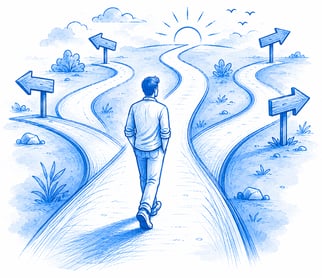 Let’s Continue to Stay in Our Lanes
In this exciting moment for our industry, let’s remember that scientific validation does not change the lane in which we operate.
Even when research demonstrates that energy work has real benefits, we are still practicing within a complementary framework alongside western medicine, not replacing what physicians do. We are here to support our clients’ wellbeing and not here to diagnose or treat diseases.
That distinction protects you and your clients by creating a safe space for you to have the beautiful practitioner-client partnership on their healing journey.
I recommend that you continue to encourage clients to keep working with their healthcare providers. This is not meant to be a limitation on what you do, but rather intended to be a sign of our ethical maturity and trustworthiness as practitioners, so that we may increase the number of people we serve.
True integration of alternative and western medicine is not a competition, but rather a fusion of viewpoints that promotes overall wellbeing. So the more legitimate energy medicine becomes, the more carefully we should define our roles.
 Our Profession Is Coming Into The Light
Increased research (and especially research that shows results) means increased visibility. And increased visibility means increased standards and expectations.
Try to see these expectations as I do: a necessary evolution in our profession that ultimately helps us make a bigger difference in the world.
Validation feels awesome, as it should!
Keep in mind that validation is not vindication and not a license to say and do whatever we might want. It does not grant us permission to overpromise or overstep, but rather invites us to rise up and hold ourselves to higher standards as the world pays closer attention to the amazing work we do.
We have been given the gift of living to witness scientific validation. If we use this gift responsibility, then we and the next generation of practitioners can continue to serve with confidence.
✏️ Editor’s Note:
As energy healers, many of us have spent years watching our work be misunderstood, questioned, or dismissed despite the results we witnessed firsthand.Now that scientific research is beginning to validate what practitioners and clients have long experienced, it's important to remember that credibility and visibility go hand in hand with responsibility.
As our profession continues to gain recognition, the opportunity before us is to meet that recognition with integrity, clear boundaries, and a commitment to ethical practice.
At EMPA, we're proud to support energy healers as our profession continues to evolve, helping practitioners build safe, ethical, and sustainable practices for the future.
-1.png?width=185&height=146&name=Learn%20more%20about%20energy%20magazine%20(1)-1.png) This article was originally published in the May/June 2026 issue of Energy Magazine. As part of the ongoing Laws & Regulations column by Ian Foster, these articles aim to help energy healers navigate legal and business challenges with clarity and confidence.
This article was originally published in the May/June 2026 issue of Energy Magazine. As part of the ongoing Laws & Regulations column by Ian Foster, these articles aim to help energy healers navigate legal and business challenges with clarity and confidence.
Disclaimer: This article is for educational purposes only and does not provide legal, financial, or medical advice. The examples are general, and coverage may vary by policy. Always refer to your insurance provider or policy language for specific details, as the policy terms take precedence. For legal concerns related to your practice, consult an attorney.
Topics: